Pipetting may seem routine, but it's one of the biggest sources of variability in the lab. Small habits—repeated hundreds of times a day—make the difference between reproducible results and noisy data. Here are the most common errors and how to avoid them.
1. Do not pre-moisten the tip
The first time you inhale, some of the liquid remains as a film on the inner wall of the tip, so you dispense slightly less than expected. This effect is even more noticeable with volatile liquids.
How to avoid it: draw in and expel the liquid two or three times with the same tip before you really start dispensing.
2. Pipette at an angle
Holding the pipette at an angle while aspirating alters the volume that enters: the greater the angle, the greater the error. This is one of the most frequent and easiest mistakes to correct.
How to avoid it: Keep the pipette as vertical as possible during aspiration and the container slightly tilted, not upside down.
3. Incorrect immersion depth
If you submerge the tip too far, you'll drag liquid stuck to the outside and contaminate it; if you barely submerge it, you'll suck in air. Both extremes will give a false reading of the volume.
How to avoid it: insert the tip only a few millimeters, just below the surface, and adjust according to the volume.
4. Aspirating and dispensing too quickly
Releasing the plunger abruptly creates bubbles, splashes inside the tip, and even aerosols. The result is inconsistent volume from well to well.
How to avoid it: accompany the plunger with a smooth and constant movement, both when aspirating and dispensing, and always maintain the same rhythm.
5. Store the pipette horizontally
Leaving the pipette lying on the table seems harmless, but if liquid remains in the tip or condensation forms, it can migrate into the body and reach the internal mechanism. Furthermore, it exposes the pipette to impacts and cross-contamination.
How to avoid it: always store it vertically, in a support designed for this purpose (carousel or pipette rack), both between uses and at the end of the day.
6. Ignoring the temperature
When the liquid, the tip, or the pipette itself are at different temperatures, the air inside expands or contracts, and the aspirated volume is no longer as expected.
How to avoid it: Let reagents and consumables equilibrate at room temperature before working and avoid heating the pipette by hand more than necessary.
7. Inadequate tips and lack of calibration
A poorly fitting or low-quality tip leaks and loses its seal. And a pipette that isn't maintained gradually deteriorates: the problem accumulates without you even noticing.
How to avoid it: Use compatible and well-sealed tips, and establish a periodic calibration plan according to your usage.
And one factor that is often forgotten: fatigue.
All of the above depends on consistent technique, and consistency suffers when your hand gets tired. After hundreds of pipettings, force and rhythm change involuntarily, and with them, reproducibility. That's why the pipette's design—its weight, ergonomics, and the smoothness of the plunger—is not a minor detail: it directly influences the quality of your results.
Fatigue-free pipetting
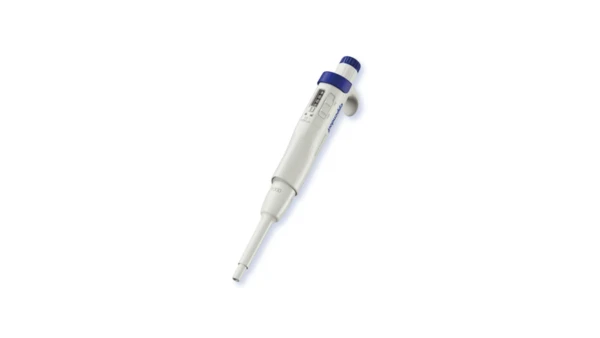
Eppendorf Research® 3 Neo
Lightweight, comfortable, and precise, Eppendorf's new generation of mechanical pipettes is designed for intensive, everyday use: less hand strain and greater consistency with every dispensing. This helps prevent the errors we just discussed.
And until the end of the year, you have one more reason: with the Research 3 Neo Pack, you get three pipettes and a fourth one free . Enter the code PH2_EP26 in your order.
View the promotion →