Filter tips for pipettes — precision and protection against contamination
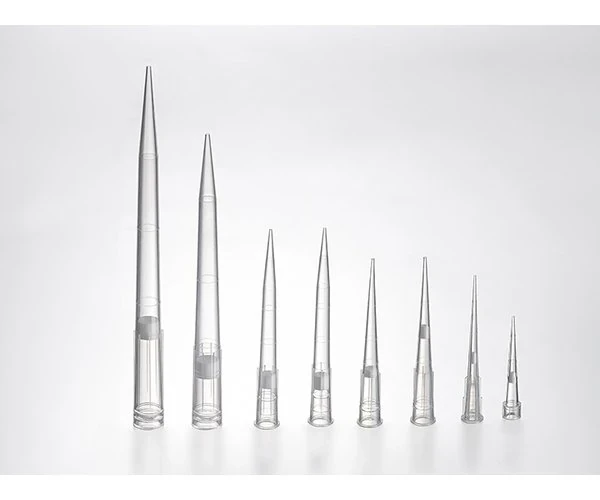
Filter tips are essential consumables in any laboratory handling biological samples, sensitive reagents, or potentially infectious agents. Unlike non-filter tips, these incorporate an internal physical filter that acts as a barrier against aerosols, microdroplets, and liquids, preventing them from entering the pipette and helping to prevent cross-contamination. In this way, they protect both the sample and the instrument (pipette) and contribute to obtaining more reliable and reproducible results.
At Proquinorte you will find a wide selection of filter tips for single-channel and multi-channel pipettes, in different volume ranges (0.1 µl to 1,000 µl), with and without sterilization, compatible with the main brands on the market.
Main features of filter tips
- Aerosol barrier filter — incorporates a physical barrier that prevents aerosols, microdroplets and liquids from penetrating the pipette cone.
- Universal compatibility — designed to fit Eppendorf, Gilson, Thermo Fisher, Brand, Sartorius and other leading brands.
- Contaminant-free — certified free of DNases, RNases, human DNA, endotoxins and pyrogens in sterile models.
- Wide range of volumes — from 0.1 µl (precision micropipettes) to 1,000 µl (large volume pipettes).
- Various presentations — in bulk, in refillable boxes or in sterile racks ready for use.
Main applications
| Application | Area | Recommended volume |
|---|---|---|
| PCR / qPCR / RT-PCR | Molecular biology | 0.1 – 10 µl / 10 – 100 µl |
| Management of infectious agents | Clinical Microbiology | 10 – 200 µl |
| Cell culture and transfection | Cell Biology | 100 – 1,000 µl |
| Molecular diagnostics / IVD | Clinical laboratory | 10 – 200 µl |
| Next-generation sequencing (NGS) | Genomics | 0.1 – 10 µl |
| Pipetting of aggressive solvents | Analytical Chemistry | 200 – 1,000 µl |
Buyer's guide: how to choose the right filter tip
Selecting the correct filter tips for your laboratory depends on several technical factors:
1. Volume range
The first parameter is the working volume of your pipette. Make sure the nominal volume of the tip covers the pipette's range with a safety margin. Using a 200 µl tip with a 100 µl pipette is acceptable; the reverse is not.
2. Pipette compatibility
Check that the tip cone is compatible with your pipette adapter. Universal fitting tips work with most brands, but for high-precision applications, it is recommended to use tips specific to the pipette manufacturer.
3. Required level of sterility
If you work with nucleic acids, clinical samples, or cell culture, opt for sterile, certified DNase/RNase-free tips. For general chemistry or buffer preparation, less expensive, non-sterile tips may suffice.
4. Presentation and format
Choose between pre-filled, stackable racks (ideal for cleanrooms and quick pipetting) or bulk bags (more economical for heavy use). Refillable racks reduce plastic waste by up to 70%.
Frequently asked questions about filter tips
What are filter tips for pipettes?
Filter tips are tips for automatic pipettes that incorporate a porous filter which acts as a physical barrier to prevent aerosols, liquids, or particles from contaminating the pipette piston and the instrument's tubing, thus protecting both the pipette and the sample. Depending on the manufacturer and model, this filter may be made of different polymeric materials.
When is it mandatory to use filter tips in the laboratory?
They are essential to use in PCR and qPCR techniques to avoid cross-contamination with DNA/RNA, in the handling of infectious agents or pathogens , in working with high-value samples that must not be contaminated, and in clinical and molecular diagnostic applications where sample integrity is critical.
Are filter tips compatible with all pipettes?
There are universal fitting models available, compatible with the leading brands of single-channel and multi-channel pipettes on the market (Eppendorf, Gilson, Thermo Fisher, Brand, etc.). Our PQN Essentials brand offers universal pipette tips compatible with the most commonly used pipettes. If you have any questions about compatibility with your pipette and would like to try them, please contact us and request a sample.
What is the difference between sterile and non-sterile filter tips?
Sterile filter tips have undergone sterilization processes (gamma irradiation or autoclaving) and are certified free of DNases, RNases, endotoxins, and human DNA. They are required in molecular biology, cell culture, and diagnostics. Non-sterile tips are used in general chemistry applications where sterility is not a critical requirement.
Can the filter tips be reused?
No. Filter tips are single-use consumables. Reusing them carries a risk of cross-contamination between samples and potential damage to the filter, which would compromise the integrity of the results and the protection of the pipette.
Filter tips: everything you need for your laboratory
Whether you work with PCR, molecular biology, microbiology, or routine analysis, at Proquinorte you'll find a wide selection of filter tips for automatic pipettes. We offer sterile models, aerosol-barrier tips, and various formats compatible with leading brands, always with the technical support you need.
We work with recognized manufacturers in the sector to offer laboratory consumables with high standards of quality, precision and traceability.
Our catalog includes filter tips for single-channel pipettes , 8 and 12-channel multi-channel pipettes , electronic pipettors and automatic pipetting systems , covering ranges from 0.1 µl ultramicro volume to 1,250 µl for large volume transfers.
If you need advice on selecting the most suitable filter tips for your application or require a quote for large volumes, please contact our technical team.
Most frequently viewed filter tips
|
PQN Essentials · SKU 00001155 Guretip Estellar 1000 µl Filter Tips — Low Retention, Sterile, DNase/RNAse Free Low-retention tip with barrier filter. Sterile, free of DNases, RNases, and endotoxins. Ideal for PCR and molecular biology. |
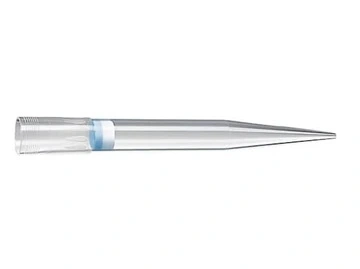
Eppendorf · SKU 07410030 Eppendorf ep Dualfilter TIPS PCR Clean & Sterile Tips 50–1,000 µl, 76 mm, blue (10 × 96) Double filter for maximum protection in PCR and qPCR. 50–1,000 µl, 76 mm. PCR Clean and sterile, 10 racks of 96 units. |
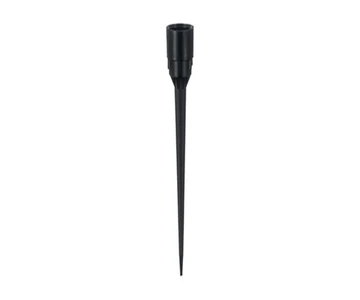
PQN Essentials · SKU 00021690 Hamilton style conductive tip 1000 µl with filter, sterile (40 × 96) Conductive tip compatible with Hamilton-style automated pipetting. Sterile, 1000 µl, for high performance and automation. |
Do you need help choosing the right filter tips?
Consult with our laboratory equipment specialists. We offer free advice on compatibility, volumes, and certifications. Contact the technical team →