Categories

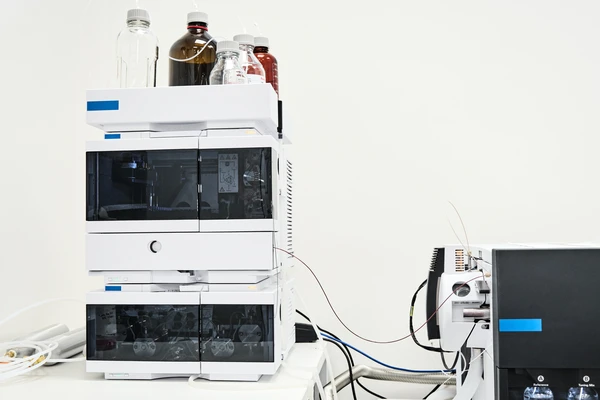
Having trouble with your HPLC? This is your complete guide

A guide designed for everyday laboratory use In this series, we help you identify and solve the most common HPLC problems, from the pump to the detector.


When HPLC stops responding: a guide to understanding (and solving) common problems

However advanced current HPLC systems may be, all of us who work in the lab know that problems can arise at any time. An unstable baseline, a peak that doesn't appear, a pressure that rises without warning… What should be a routine analysis suddenly becomes a diagnostic exercise.

Even the most robust methods, the best-designed columns , and the purest solvents are not immune to minor discrepancies that ultimately affect system performance. Sometimes the source of the problem is obvious. Other times, however, it requires a more expert and meticulous examination.

This guide offers a practical and clear approach to detecting, interpreting, and resolving the most common errors in liquid chromatography. More than just a list of symptoms, we want to help you understand what's happening in the system when something stops working as it should. Because anticipating errors—and recognizing the signs early—not only saves time and resources, but also ensures the reliability of your results.

We'll keep you updated with new problems and solutions every week. To stay informed, follow us on LinkedIn.

Follow us on LinkedIn


Artículos recomendados

See all
V Interdisciplinary Congress on Human Genetics (AEGH)
The Proquinorte team will be present at the Granada Conference Centre for the 5th Interdisciplinary Congress on Human Genetics (AEGH), a key meeting point for professionals in the clinical, research and diagnostic fields.
Unambiguous HLA typing: why full-length typing is a game-changer
HLA typing is a critical component in multiple areas of modern medicine: organ and bone marrow transplantation, clinical immunology, pharmacogenomics, and personalized medicine. However, for years, laboratories have faced a significant limitation: ambiguity in the results, especially when using short-read NGS-based methodologies.
PFAS: what they are and how to detect the “forever chemicals”
PFAS (per- and polyfluoroalkyl substances) are a family of more than 3,000 synthetic compounds that have been used since the 1940s in sectors as diverse as the textile, food, automotive, and chemical industries. Among the best known are PFOA, PFOS, and GenX.