In a laboratory, precision is non-negotiable. Every piece of data and result depends on the reliability of the instruments used daily. And when we talk about laboratory balances , maintaining that reliability is crucial , as equipment maintenance is just as important as acquiring the right one for your process.
And what is the essential tool for maintaining your scale? Standard weights .
What are standard weights?
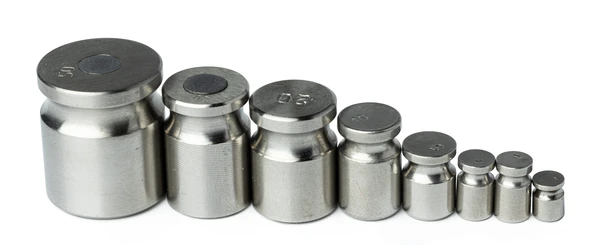
Standard weights—also known as calibration weights —are objects of known mass, specifically designed to check, adjust, and maintain the accuracy of laboratory balances . They serve as a standard reference against which the balance's measurement is compared.
Whether in routine control or official calibration, these weights allow you to detect deviations, correct errors and ensure that each weighing is reliable, especially in laboratories where margins of error are minimal.
Why are they important for the accuracy of scales?
Even the most advanced scale can lose accuracy with daily use, temperature changes, or simply the passage of time.
An incorrect weighing can jeopardize results, processes, and critical decisions.
Standard weights help to:
- Detect deviations in the performance of the scale.
- Make internal or external adjustments , depending on the scale model.
- Prevent cumulative errors in sensitive processes such as formulation, chemical analysis, or reagent weighing.
In short: if you care about your results, you need to take care of your scales. And that starts with using the right standard weights.
Want to learn more about balances for your lab? Read this article: Everything you need to know about lab balances: what they are, types, how to choose and maintain them
Types of standard weights and accuracy classes
Not all standard weights are the same. There are different accuracy classes established by standards such as the OIML (International Organization of Legal Metrology):
- Class E1 and E2 : for analytical balances and high-precision microbalances.
- Class F1 and F2 : for standard precision balances.
- Class M1 , M2 and M3 : for more robust or industrial scales, where less sensitivity is required.
The choice depends directly on the type of scale you use and the level of precision required for your processes. Furthermore, weights can be purchased individually or in sets, and in materials such as polished stainless steel, ideal for ensuring stability and corrosion resistance.
Good practices for its use and preservation
For a standard weight to remain reliable, it is not enough to simply have it: it must be cared for.
Here are some key recommendations:
- Always handle it with tweezers or gloves : contact with the skin can alter its mass due to grease or moisture.
- Store it in its original case and in a clean, dry environment.
- Avoid bumps or falls , even if they seem minor.
Proper maintenance of the standard weights is as important as that of the balance they calibrate.
Calibration weights are one of those silent elements that make a job well done possible. They don't take up much space, but their impact on data quality is enormous. Investing in a good set of calibration weights and following a regular maintenance plan is the best way to ensure your laboratory balances continue to perform with the precision you expect.
Are you looking for new scales?
Take advantage of our special offer on OHAUS scales , a leading brand in reliability and weighing technology. Ideal for laboratories seeking precision, durability, and excellent after-sales service.