From January 12, 2026 , all EU member states are required to monitor PFAS in drinking water, with limits of 0.5 µg/L for "Total PFAS" and 0.1 µg/L for the sum of 20 PFAS. And while laboratories adapt to this requirement, the scientific and regulatory focus is already shifting towards a particularly elusive group: ultra-short-chain PFAS .
They are the shortest, the most polar, and, coincidentally, the most difficult to analyze. Let's see why they have become the new headache for water and environmental laboratories, and how to tackle them.
Do you need some background first? We already explained what PFAS are, where they are found, and how they affect health in a previous article. Here, we'll get straight to the analytical challenge of the ultra-short chain.
The new front: the ultra-short chain
Within the vast family of PFAS, ultra-short-chain PFAS are those with only two or three carbon atoms (C2–C3). The most well-known is TFA (trifluoroacetic acid), the smallest PFAS… and currently the most abundant in the environment.
Why are they so difficult to analyze?
Here's the crux of the matter. Conventional reversed-phase columns (those routinely used in LC-MS/MS) separate compounds based on their affinity for a nonpolar phase. But ultrashort-chain PFAS are highly polar and anionic : they barely interact with that phase, so they pass through with virtually no retention , sticking to the front of the chromatogram.
Without retention, there is no reliable separation, and without separation, there is no reliable quantification. The peaks overlap with the solvent front and system noise, leading to repeats, reinjections, and dubious results.
The problem of the "fundamental" of the system
And there's an added trap: the LC equipment itself, the tubing, the solvents, and the additives all contribute their own PFAS (such as TFA or PFBA). This system "background" appears in the exact same area as the ultrashort analytes in your sample, making it very difficult to distinguish which signal is real and which is contamination from the instrument itself.
The solution: Poroshell Height 120 PFAS
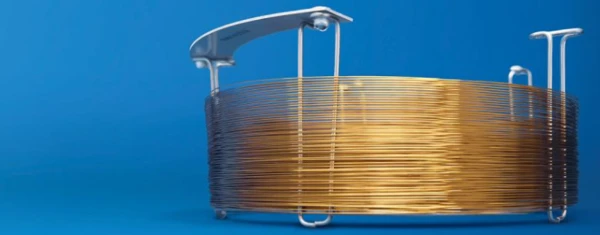
Agilent Altura Poroshell 120 PFAS columns tackle this challenge with a comprehensive system approach, not just a column-based one. They combine three elements:
1. A new phase: Poroshell 120 mixed-mode core-shell particles (C18), designed to truly retain the polar and anionic PFAS that normal columns let escape.
2. Ultra Inert Height Hardware: the inert coating that blocks active metal sites, for more symmetrical peaks, greater sensitivity and less drag.
3. Delay column (PFAS delay column): separates the PFAS generated by the system itself from those coming from your sample, leaving the area of ultrashort peaks clean.
The result is what a water laboratory needs today: real retention for C1–C3 , clean baselines, and quantification you can trust.
What changes in your daily life
✓ Up to 5x more retention for PFAS from C1 to C3 versus a leading competitor column, with more scope to optimize the method.
✓ C1–C18 analysis in a single injection: resolves ultrashort species (DFA, TFA, PFPrA) at the beginning and long chain species at the end, without changing methods.
✓ Dilute-and-shoot: In treated water, you can inject directly, without prior solid-phase extraction (SPE). Less preparation, fewer consumables, less time.
✓ High volume injection: up to 200 µL directly while maintaining good peak shape, to gain sensitivity.
✓ Fewer repetitions: clean baselines and defined peaks translate into fewer reinjections and faster results.
Frequently Asked Questions
What are ultra-short chain PFAS?
These are the smallest PFAS, with two or three carbon atoms (C2–C3), such as TFA or PFPrA. They are highly soluble in water, very mobile, and very persistent, and are currently the most abundant in the environment.
Why are they so difficult to analyze?
Due to their high polarity and anionic character, they are barely retained in conventional reversed-phase columns: they elute almost without separation, mixed with the solvent front and system noise, which prevents reliable quantification.
What is a delay column?
It's an additional column that shifts the PFAS generated by the equipment itself in time, so they don't coincide with the peaks in your sample. This allows you to distinguish the real signal from system contamination.
Can I analyze C1–C18 in a single injection? Yes. The Altura Poroshell 120 PFAS retains everything from ultrashort to long-chain species in a single method, without having to switch between columns or conditions.
Get ahead of PFAS regulation
At Proquinorte, the official Agilent distributor in northern Spain, we help you fine-tune your PFAS method and choose the Altura Poroshell 120 column that fits your laboratory.
Proquinorte · near you / close to you · www.proquinorte.com