Magnetic beads have quietly transformed science. They are behind much of the progress in molecular biology over the last few decades, thanks to their essential role in nucleic acid purification. These particles allow for the isolation, cleaning, and preparation of the genetic material upon which every reliable experiment is built, and today technologies like Revvity's chemagic™ represent their most advanced version.
How magnetic beads were born and changed DNA extraction
The story began in the 1970s, when several research groups were exploring how to use magnetizable particles to separate biomolecules without resorting to centrifugation. The idea was simple and brilliant: if a fragment of DNA could adhere to a particle that responded to a magnetic field, a magnet would be enough to retrieve it.
By the 1990s, that novelty had become the standard. Magnetic beads began to be used extensively to purify DNA and RNA, displacing traditional methods. Their success was due to three advantages that still make them indispensable today:
- They eliminate manual steps and prolonged centrifugation,
- They allow the automation of routine processes,
- and offer cleaner and more reproducible recovery.
The result was a true revolution.
Why not all magnetic beads offer the same performance 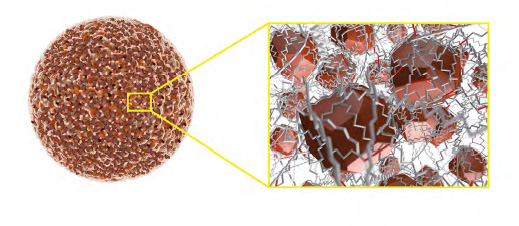
Over the years, magnetic beads became the most widely used method for nucleic acid purification. However, not all of them work the same way.
Although the magnetic principle is common, differences in composition, particle size, and surface chemistry can affect the final result. Some beads exhibit slower magnetization or lower stability, which translates into differences in purity, yield, or reproducibility, especially in high-volume protocols or automated nucleic acid purification flows.
That is why, in recent years, a new generation of optimized beads has emerged: particles designed to maintain the effectiveness of the magnetic method, but with a more controlled and stable surface chemistry.
Revvity's chemagic technology belongs precisely to this category: a refined evolution that retains the best of the original magnetic principle, while eliminating its limitations.
What makes Revvity's chemagic™ technology special in nucleic acid purification?
Instead of redesigning the process, they focused on improving the particle : the heart of purification. This led to the creation of Revvity's M-PVA magnetic beads and chemagic kits, which represent an optimized version of automated DNA and RNA extraction using magnetic separation.
Their difference lies not in the format or the protocol, but in the chemistry behind it:
- Polyvinyl alcohol matrix (M-PVA): a hydrophilic base that reduces nonspecific binding of proteins and contaminants. The result is purer, cleaner DNA or RNA for PCR, NGS, or any downstream analysis.
- High proportion of magnetite: the beads contain between 50 and 60% magnetic material, which accelerates separations even with large volumes, without compromising recovery.
- Homogeneous and resistant structure: its uniform composition prevents breakage and material loss in automated processes, maintaining reliability batch after batch.
- Specific functionalization: versions with carboxyl, streptavidin or oligo(dT) groups allow the purification to be adapted to different molecules, from genomic DNA to mRNA.
None of this is visible to the naked eye. But in practice, each improvement translates into higher purity, faster processes, and fewer unnecessary repetitions.
Real impact of chemagic™ technology in modern laboratories
The adoption of technologies such as Chemagic has redefined efficiency in the magnetic purification of DNA and RNA in research and diagnostic laboratories.
- Cleaner extractions mean more reliable results, without repeat PCRs due to residual inhibitors.
- Faster processes mean more samples per day without increasing workload.
- Stable automation allows performance to depend less on the operator and more on the system design.
Magnetic pearls have gone from being an accessory to being a mainstay.
Quiet innovation: perfecting what already works
The evolution of magnetic beads has not consisted of a spectacular leap, but rather an accumulation of small advances: more purity, more stability, more chemical control.
That is precisely the philosophy behind Chemagic technology : perfecting what already works.
Conclusion: an evolution that defines the present
Today, magnetic beads are an integral part of the DNA of any modern laboratory. And, within that microscopic world, the Chemagic line represents the point where chemical engineering and practical experience converge.
Chemagic kits are the latest example of how a mature magnetic purification technology can continue to evolve to offer greater purity, speed, and reproducibility in automated nucleic acid extraction.
At Proquinorte, we believe in quiet innovation. That's why we are official distributors of Revvity in Spain, offering chemagic™ technology for the magnetic and automated purification of nucleic acids in research laboratories.