Choosing a biological safety cabinet is an important decision for any laboratory working with microorganisms, pathogens, or cell cultures. A good choice not only ensures the protection of personnel and samples but also optimizes laboratory resources and guarantees regulatory compliance.
But… what factors should you consider when choosing the cabin that best suits your environment?
1. Identify the main applications
The first step is to define what the cabin will be used for:
- Microbiology and virology: you need maximum protection against risk agents.
- Hematology or genetics: airflow stability is critical to maintaining sample integrity.
- Cell culture: a contamination-free environment is required to ensure the purity of the work.
Each application has particularities that determine the most suitable type and size of cabin.
2. Ensure regulatory compliance
In biosafety, there is no room for error. Therefore, it is essential that the cabin complies with the most demanding European and international standards , such as:
- EN-12469:2000 (reference standard in Europe).
- NSF (US standards).
- ISO 14644-1 (air cleanliness conditions in the work area).
If you want to learn more about certifications, we recommend this article on international biosafety standards .
3. Evaluate the ergonomics and design
The cabin should facilitate daily work:
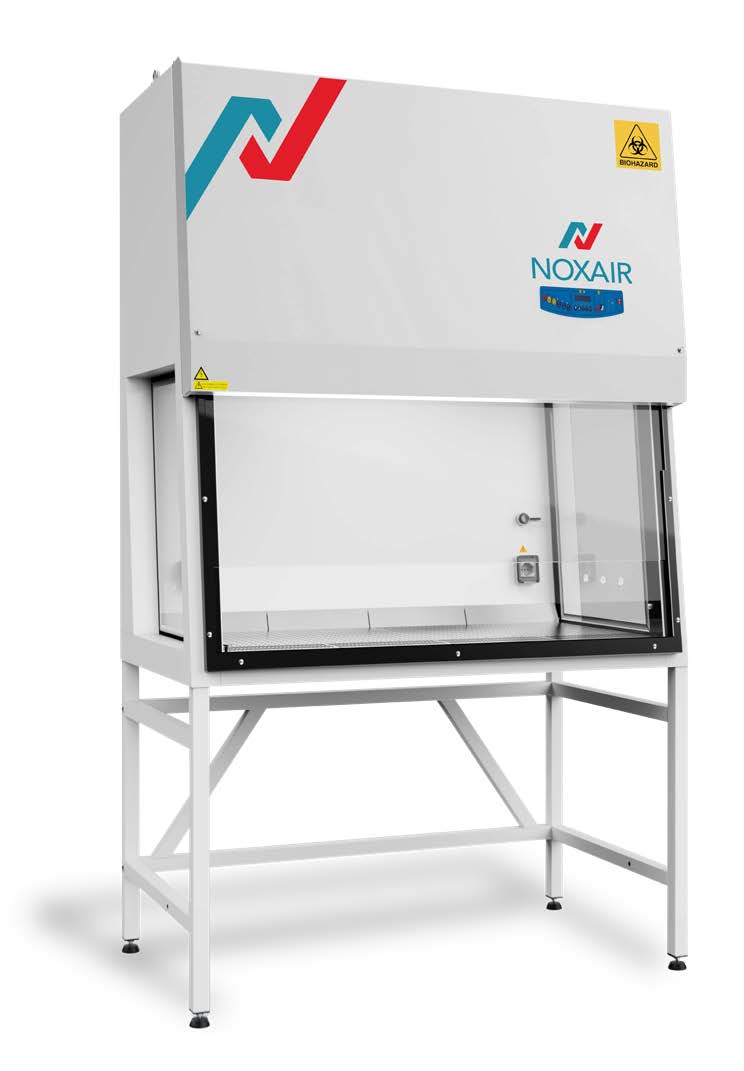
- Slanted windows that improve visibility.
- Easy cleaning and maintenance.
- Accessibility for introducing microscopes or other equipment.
- Low noise and vibration levels for a comfortable working environment.
User comfort is not a luxury: it directly impacts laboratory safety and efficiency.
4. Consider the sustainability of the equipment
Today, more and more laboratories are looking for solutions that combine safety with energy efficiency .
The BIO II STANDARD cabins incorporate the ECS® Eco Controlling System , which reduces electricity consumption and decreases CO₂ emissions by up to 70%.
This makes the choice of cabin not only a technical decision, but also a statement of commitment to sustainability.
If you want to learn more about how to reduce the environmental footprint in your laboratory, don't miss this article on sustainability in biosafety .
5. Adjust the size and equipment to your needs
The cabinets are available in different sizes (UCS 09, UCS 12, UCS 15, and UCS 18), with accessories and customization options to suit any laboratory. The choice will depend on both the available space and the expected workload.
Conclusion: a safe and responsible investment
Choosing the right cabinet means protecting your team, samples, and the environment, while optimizing resources and complying with current regulations.
Active promotion: 15% discount on BIO II STANDARD cabins
Contact our Product Manager, Iñaki Herrerías , for personalized advice and to find the booth that best suits your laboratory.
📩 ignacio@noxair.com