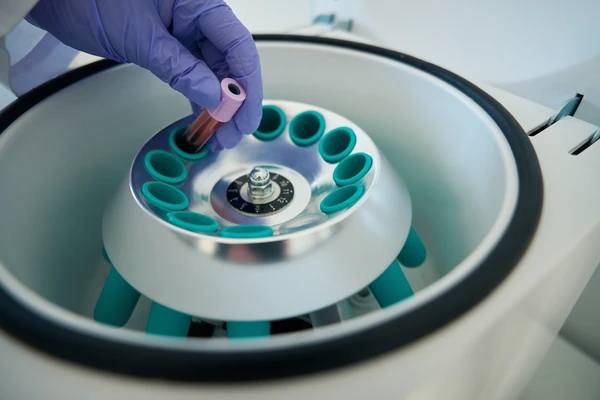
Clinical laboratories face a dual challenge: maintaining maximum reliability in in vitro diagnostic (IVD) processes while simultaneously reducing their environmental impact. The new generation of OHAUS Frontier IVD centrifuges addresses both needs, combining diagnostic precision with more sustainable cooling technology.
Why are centrifuges critical in in vitro diagnostics?
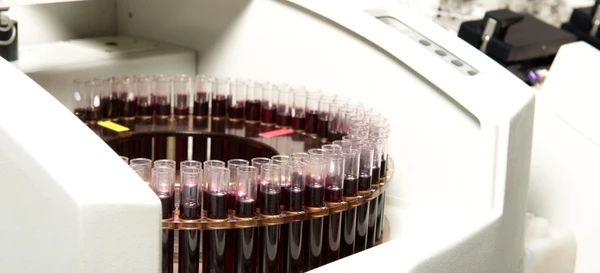
Laboratory centrifuges are essential equipment in hospitals and clinical analysis centers. They are used daily for:
- Blood sample processing
- Separation of serum and plasma
- Sample preparation for biochemical, immunological, and hematological tests
Since a significant portion of clinical decisions are based on IVD test results, the stability of the centrifugation process directly impacts the quality of the analytical result. Therefore, laboratories seek IVD centrifuges that offer repeatability, safety, and regulatory compliance.
Centrifuges compliant with IVD Regulation (EU) 2017/746
The OHAUS Frontier range is designed for clinical environments and complies with the European Regulation on in vitro diagnostic medical devices (EU) 2017/746, Class A. This provides an additional framework of confidence for its use in diagnostic applications, where traceability, reliability, and process control are paramount.
For laboratory managers, this point is key when selecting equipment that is aligned with current regulatory requirements.
R290 Refrigerant: A more environmentally friendly alternative in refrigerated centrifuges
One of the most distinctive aspects of these IVD centrifuges is the incorporation of the natural refrigerant R290 in the cooling system.
From an environmental point of view, this data is relevant:
- R290 has a global warming potential (GWP) of 3
- It is 700 times lower than that of traditional synthetic refrigerants such as R452A
In practice, this means that refrigerated centrifuges can help reduce the environmental footprint of the laboratory, something increasingly valued in hospitals and centers that implement sustainability and energy efficiency policies.
Safety, performance and sustainability in one device
The use of a more environmentally friendly refrigerant does not compromise the safety or performance of the equipment. The cooling systems are designed and tested to ensure stable, efficient, and safe operation, maintaining the quality standards required for diagnostic applications.
If you're considering adding more efficient and sustainable IVD centrifuges to your lab, check out the OHAUS Frontier IVD models!
Frontier™ 5000 Multi-Pro Series IVD
Models:
- Multi Centrifuges, 230V FC5714 (07173565) ,
- Multi Centrifuges, 230V FC5718R (07173563)
- Multi Centrifuges, 230V FC5718 (07173564)
Frontier™ 5000 Multi IVD Series
Models:
- Multi Centrifuges, 230V FC5706P (07173570)
- Multi Centrifuges, 230V FC5706P+R77 (07173571)
- Multi Centrifuges, 230V FC5707+R05 (07173572)
Frontier™ 5000 Micro IVD Series
Models:
- Multi Centrifuges, 230V FC5513 (07173568)
- Multi Centrifuges, 230V FC5513+R02 (07173569)
- Multi Centrifuges, 230V FC5513L+R06 (00017283)
- Multi Centrifuges, 230V FC5515 (07173567)
- Multi Centrifuges, 230V FC5515R (07173566) .