With the arrival of autumn/winter, the flu virus (Influenza A and B) once again becomes a threat to public health. Unlike a simple cold, the flu spreads very quickly and can seriously affect the elderly, children, and patients with chronic illnesses.
Furthermore, a person with the flu can be contagious before showing symptoms, or even if asymptomatic . Therefore, having an early detection system is not only recommended, it is essential.
Flu vs. Common Cold vs. COVID-19: How to Tell Them Apart
The flu, caused by Influenza A and B viruses, usually appears suddenly and with more intense symptoms: high fever, muscle pain, and marked fatigue.
The common cold, usually caused by rhinovirus, is milder and progresses gradually, with a low-grade fever or even no fever.
For its part, COVID-19 can show symptoms very similar to those of the flu, making it difficult to distinguish them solely through clinical observation.
Symptoms alone do not allow for a reliable diagnosis. A specific test is necessary.
Advantages of a rapid flu diagnosis
Detecting the flu early is essential to curbing its impact. Early diagnosis allows for the prompt initiation of antiviral treatment, thus increasing its chances of success. It also facilitates the immediate implementation of isolation and infection prevention measures, reducing the spread of the virus in vulnerable settings. Furthermore, rapid diagnosis helps decrease the risk of hospitalizations and complications, protecting both patients and healthcare workers. In places with a high concentration of susceptible individuals, such as hospitals, clinics, or nursing homes, every minute counts in containing an outbreak.
Ustar equipment: fast and reliable detection
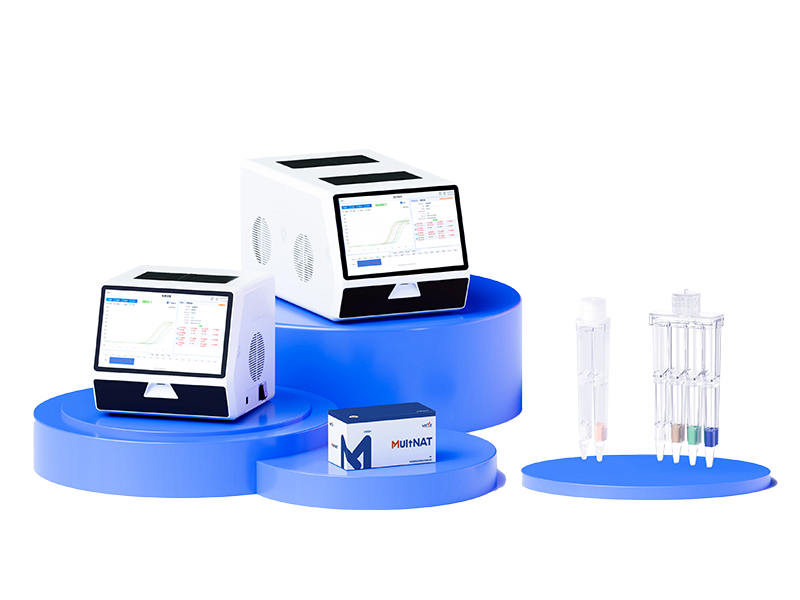
uStar molecular diagnostic systems are designed to deliver accurate results in less than 40 minutes directly at the point of care (POCT).
Thanks to their automated technology and disposable cartridges, these systems allow even environments without a centralized laboratory to perform high-precision molecular testing.
EasyNAT® technology and CPA method
One of uStar 's most outstanding products is the EasyNAT® Flu A/B , a kit that uses CPA (Cross-Priming Amplification) technology for the simultaneous detection of Influenza A and B.
This system integrates the following into a single cartridge:
- Nucleic acid extraction.
- Molecular amplification.
- Real-time fluorescence detection.
The entire flow is fully automated under the concept " samples in, results out " , reducing manual handling to less than 5 minutes and minimizing the risk of contamination.
Advantages of Ustar equipment for detecting influenza
- Fast results : complete analysis in ~38 minutes.
- High reliability : validated molecular technology with high sensitivity and specificity.
- Ease of use : does not require highly specialized personnel.
- Adaptability : modular analyzer options (4, 8 or 16 modules) for different work volumes.
- Effective prevention : simultaneous detection of Influenza A and B to act immediately and break the chain of contagion.
uStar systems are ideal for hospitals and clinics with high patient volume, nursing homes and social care centers, and/or areas with limited resources.
By enabling rapid molecular diagnosis at the point of care , they facilitate clinical decision-making in a matter of minutes, reducing the time to start treatment and improving outbreak containment.
Protect your patients this winter
Flu season doesn't wait. Incorporating uStar equipment into your facility is an investment in safety, speed, and quality of care. With rapid and accurate diagnosis, you can act sooner, reduce the impact, and improve patient care.
➡ Discover how Ustar equipment can help you implement rapid flu diagnosis in your facility. Request a free demo and see firsthand the speed and accuracy of Influenza A and B detection. Flu season is here: act now.